
Pinot Noir in Quebec: Discover an Elegant Grape Variety Perfectly Suited to Our Terroir
Updated: Jul 30
Pinot Noir is one of the world's most admired grape varieties. Renowned for its elegance, delicate aromas, and remarkable ability to express its terroir, it produces refined red wines that appeal to wine lovers and sommeliers alike.
Originally from Burgundy, France, this noble grape is now grown in cool-climate wine regions around the world, including Quebec. At our vineyard, Pinot Noir has held a special place since the very beginning and has consistently demonstrated its remarkable potential.
In this article, discover the characteristics of Pinot Noir, how it thrives in Quebec's climate, and the best ways to enjoy it.
What Is Pinot Noir? Origins and Characteristics
Pinot Noir is a red grape variety known for producing elegant, fruit-forward, and refined wines.

Its name comes from the compact shape of its grape clusters, which resemble a pine cone ("pinot" derives from the French word for pine). Cultivated for over a thousand years, it is deeply associated with Burgundy, where it produces some of the world's most celebrated wines.
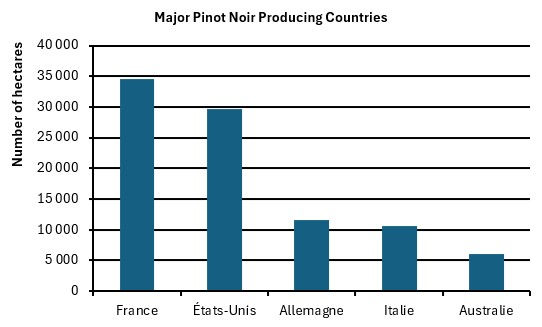
grapes grown?
Today, it is grown in many renowned wine regions, including:
Oregon
California
New Zealand
Australia
Germany
Italy
Several regions of Canada
One of the reasons Pinot Noir is so highly prized is its exceptional ability to reflect the terroir in which it is grown. Climate, soil, and the winemaker's approach all have a profound influence on the wine's character.
Pinot Noir in Quebec: A Grape Variety Well Suited to Cool Climates
Quebec's wine industry has evolved tremendously over the past few decades. Thanks to advances in viticulture, improved clone selection, and a deeper understanding of local terroirs, several European grape varieties (Vitis vinifera) can now be grown successfully.
Among them, Pinot Noir holds a special place.
Today, it is the most widely planted noble red grape variety in Quebec. Approximately 21% of Quebec vineyards grow Pinot Noir, representing nearly 4% of the province's total vineyard acreage.
Pinot Noir naturally thrives in cool climates, where it retains vibrant acidity while developing delicate, complex aromas. These conditions are found in several Quebec wine regions, including:
Montérégie
Eastern Townships
Richelieu Valley
Its growing popularity reflects the confidence Quebec winemakers have in this demanding yet rewarding variety.
The Challenges of Growing Pinot Noir
Despite its tremendous potential, Pinot Noir remains one of the most challenging grape varieties to cultivate.
Its compact clusters and thin skin make it particularly susceptible to several vine diseases, including:

Downy mildew
Black rot
Botrytis (gray mold)
The compact bunches can also occasionally harbor small insects such as bees or ladybugs, requiring extra care during sorting.
Harvesting is equally demanding. The dense clusters make it more difficult to reach the stems during picking, while hand sorting requires additional precision. And, of course, the sticky juice from the berries makes harvest... a little messier!

To minimize disease pressure and preserve fruit quality, Pinot Noir is often one of the first noble grape varieties harvested in Quebec vineyards.
Despite these challenges, it remains a favorite among winemakers because it produces elegant wines that beautifully express their terroir.
Typical Aromas of Pinot Noir

Pinot Noir is celebrated for its aromatic finesse and complexity.
In a Quebec-grown Pinot Noir, you'll often find aromas of:
Cherry
Raspberry
Fresh strawberry
With bottle aging or barrel maturation, more complex notes may emerge:
Forest floor
Sweet spices
Floral notes
Mushroom
Subtle oak nuances
This evolving aromatic profile makes Pinot Noir a fascinating wine to enjoy at different stages of its life.
Characteristics of Pinot Noir
Pinot Noir wines are generally recognized for their distinctive style:

Light ruby-red color
Soft tannins
Bright, balanced acidity
Light to medium body
This structure creates wines that are elegant, approachable, and exceptionally food-friendly.
Unlike fuller-bodied reds, Pinot Noir emphasizes finesse and balance rather than power and concentration.
Food Pairings with Pinot Noir
Pinot Noir is one of the most versatile red wines at the table. Thanks to its freshness, silky tannins, and vibrant red fruit character, it pairs beautifully with a wide range of dishes.
It can even accompany an entire meal—from appetizer to dessert.
Some particularly successful pairings include:
Charcuterie and cheese boards (Brie, Camembert, goat cheese)
Poultry (roast chicken, turkey, duck)
Delicate red meats (lamb, pork)
Fish and seafood (salmon, tuna, grilled shrimp)
Vegetarian dishes featuring mushrooms or roasted beets
Chocolate desserts, chocolate-covered strawberries, or raspberry-based desserts
Avoid very rich, heavy dishes or intensely spicy foods, which can overpower the wine's delicate character.

Quebec Pinot Noir: A Wine Worth Discovering
In Quebec, Pinot Noir proves that a world-class grape variety can flourish far from its homeland. In our cool climate, it produces elegant, expressive wines that are deeply connected to their terroir.
Every vintage tells a unique story—of a growing season, a landscape, skilled craftsmanship, and a passion for viticulture.
Here, Pinot Noir develops a character all its own.
The best way to discover it is simply to pour yourself a glass.
Frequently Asked Questions About Pinot Noir
Why Is Pinot Noir So Popular?
Pinot Noir is widely regarded as one of the world's most refined red grape varieties.
Its popularity comes from its elegance, finesse, and extraordinary ability to express terroir. Every wine region produces a distinct interpretation, making Pinot Noir endlessly fascinating for wine enthusiasts.
Compared to more powerful red wines, it generally offers a lighter texture and subtle red fruit aromas, making it highly approachable.
How Should Pinot Noir Be Served?
To fully appreciate its aromas, follow these simple guidelines:
Serving temperature: 14–16°C (57–61°F)
Glassware: Large Burgundy-style wine glass
Aeration: Some vintages benefit from brief decanting or a few minutes in the glass.
A short period of aeration often helps reveal the wine's full aromatic complexity.
Can Pinot Noir Be Aged?
Yes. Certain Pinot Noirs age beautifully.
The finest examples can evolve gracefully for 5 to 10 years, and sometimes even longer depending on the vintage and storage conditions.
Over time, fresh red fruit aromas gradually develop into more complex notes of:
Forest floor
Leather
Mushroom
Spice
That said, many Pinot Noirs are also crafted to be enjoyed while young, when their bright fruit character is at its freshest.
How Does Quebec Pinot Noir Compare to California Pinot Noir?
The style of Pinot Noir is heavily influenced by climate.
In cool-climate regions such as Burgundy, Oregon, Germany, and Quebec, Pinot Noir tends to be:
Lighter-bodied
More delicate
Higher in acidity
Dominated by fresh red fruit aromas
In warmer climates, such as California, Pinot Noir is typically:
Fuller-bodied
Richer in alcohol
More intensely ripe
Characterized by darker fruit flavors such as black cherry and plum.


Comments