
The Ten Steps of Winemaking
Making wine — anyone can give it a try. But making good wine — the kind that keeps you coming
back for more — is an entirely different story.
The final taste of a wine results from many factors: the grape variety, of course, but also the terroir, the yeasts used, the winemaking practices in the cellar, the fermentation methods and duration, the type of vessel chosen for aging, and much more. Each of these elements profoundly shapes the wine’s aromas, flavors, and texture.
In the following text, you’ll discover in detail the ten key steps we follow to craft our red and white wines — a meticulous process in which every decision matters to achieve the quality we aim for.
1. Grape Harvest
Waiting for the grapes to reach full maturity is essential to producing quality wine. Grapes harvested too early will make a wine that’s acidic and lacking in expression, while a late harvest can result in an overly round wine with pronounced candied fruit aromas.
But how can you tell when the grapes are ready? A simple taste test gives a first idea of the sugar and acidity levels. However, for a more precise and objective assessment, we use an optical refractometer. This instrument measures the sugar concentration in grape juice using the Brix scale. It works much like a microscope: a drop of juice is placed on the lens, and the light passing through it provides a digital reading of the sugar level. We aim for a concentration between 20 and 22° Brix before harvest, which corresponds to a potential alcohol content of 11.5 to 12.5%.


Once optimal ripeness is reached, the harvest can begin. We favor manual picking, as it allows careful sorting right in the vineyard: only healthy, fully ripe grapes are selected. This meticulous approach reflects our ongoing commitment to producing wines of the highest quality.
2. Destemming and Crushing
Once harvested, the grape clusters are brought to the winery, where they pass through a mechanical destemmer-crusher. This machine removes the stems — the woody part of the bunch — and gently crushes the berries to break their skins, releasing the juice and pulp while keeping the seeds intact. Unwanted tannins are mainly found in the stems and inside the seeds.
From this point on, the process varies depending on the type of wine being produced.
For red wine, the juice, skins, and pulp are transferred together into a stainless steel tank to begin fermentation and maceration.
For white wine, the grapes are pressed in whole clusters, without maceration. Only the juice is kept and moved to the tank. This technique helps preserve the freshness, finesse, and liveliness that characterize white wines.
3.a Alcoholic Fermentation
(5-11 days)
Alcoholic fermentation begins as soon as the grapes are crushed: the fruit’s natural sugars are transformed into alcohol by yeasts, which also produce CO₂ and heat in the process. Depending on the wine style, temperature must be carefully controlled.
Grapes naturally carry what are called wild (indigenous) yeasts. These initiate fermentation but stop early, as they can only tolerate low alcohol levels (around 4–6%). At that point, Saccharomyces cerevisiae, the “noble yeast,” takes over, capable of carrying fermentation through to completion. Though it’s rarely present on grape skins, it can be found everywhere in the winery — on tools, tanks, even the walls — a true permanent resident!
Winemakers approach this stage differently depending on their philosophy. Some favor a 100% natural fermentation with only indigenous yeasts, while others add sulfites to neutralize unpredictable strains before inoculating the must with Saccharomyces cerevisiae to ensure a stable result.
At our vineyard, we work organically and keep sulfite levels to a minimum. To stay in control while respecting our natural approach, we start with a gentle yeast (Excellence B Nature) that prevents harmful microbes from developing, then inoculate with Saccharomyces cerevisiae to complete fermentation efficiently and safely.
💡 Did you know?
Also known as “brewer’s yeast,” Saccharomyces cerevisiae offers several health benefits: it supports digestion, strengthens the immune system, and contributes to healthy skin, hair, and nails — a pleasant bonus alongside making great wine!
3.b Malolactic Conversion
(+/- 10 days)
Often mistakenly called malolactic fermentation, this process — commonly shortened to “malo” — refers to the conversion of malic acid (sharper and more biting) into lactic acid (smoother and rounder), thanks to the action of lactic acid bacteria, primarily Oenococcus oeni. This transformation softens the wine, enriches its aromatic profile, and ensures microbiological stability.
At our winery, we carry out malolactic conversion simultaneously with alcoholic fermentation. The CO₂ and heat naturally produced during fermentation create the ideal environment for the bacteria, which minimizes handling and reduces risk.
The effect of “malo” varies depending on the grape variety. We apply it to all our red wines, but not necessarily to certain whites, such as Riesling, where it would dull the wine’s lively character. For Chardonnay, however, it’s highly desirable — giving rise to the grape’s signature buttery notes.
4. Maceration
(Duration: entire alcoholic fermentation + 3 to 14 additional days)
Red wine is left to macerate with the grape skins throughout the entire fermentation period, and often for an extra 3 to 14 days afterward. It’s during this stage that the wine develops its color, tannins, and much of its aromatic complexity.
To ensure proper maceration and avoid defects (such as oxidation or unpleasant volatile acidity), the cap — the layer of grape skins that rises to the surface of the tank — must be managed daily. Two main techniques are used for this:
Punching down (pigeage)
This gentle method consists of pushing the cap back down into the juice using a large tool that looks a bit like a plunger — much like mashing potatoes. It allows for a delicate extraction of aromas, usually resulting in finer, more elegant wines.
Pumping over (remontage)
Here, wine from the bottom of the tank is pumped over the cap, rehydrating it and allowing for a more intense extraction of the compounds present in the grape skins. This technique often produces bolder, more expressive red wines.
Depending on the desired wine style, winemakers may choose one method, the other, or a combination of both, balancing structure, aroma, and finesse.
5. Wine Pressing

Pressing is done using a pneumatic press — a modern piece of equipment that applies gentle, controlled pressure through an inflatable membrane. This method allows the grapes or marc (skins and solids) to be pressed carefully, with constant monitoring of juice quality at each stage. As soon as the juice becomes too astringent, pressing is stopped.
For white wine, pressing takes place immediately after harvest. The whole grape clusters are pressed delicately to obtain a clear, expressive juice, while limiting the extraction of bitter compounds from stems, seeds, and skins. The juice is then transferred to a tank to begin fermentation.
For red wine, pressing occurs after maceration. The juice that flows out naturally is called “free-run wine” (vin de goutte): it’s lighter, less tannic, and less colored, since it hasn’t been extracted under pressure. The wine obtained from pressing the marc — known as “press wine” (vin de presse) — is richer and more concentrated. Up to 15% additional wine can be recovered this way. Depending on the desired style, these two wines are then blended or aged separately.
Free-run wine Grape marc to be pressed Press Wine
6. Wine Aging
Aging is a key stage that develops the wine’s aromatic complexity, texture, and balance. Depending on the type of vessel used, the wine evolves differently. Here are the main methods we employ:
Oak Barrels

Aging wine in oak barrels — the traditional method — allows for slow micro-oxygenation, which softens tannins and harmonizes aromas. The oak can impart notes of vanilla, toasted bread, coconut, or spice, depending on its origin (French or American) and the degree of toasting. This process is particularly suited to structured red wines and certain high-end whites.
We use one-year-old French barrels sourced from prestigious estates, prized for their finesse and ability to preserve fruit purity. Each barrel is used up to three times before becoming neutral. They’re stored in a cool, humid cellar (around 90%) to prevent the wood from drying and leaking. Because natural evaporation (“the angels’ share”) occurs, barrels must be topped up regularly (ouillage) to prevent oxidation.
Stainless Steel Tanks
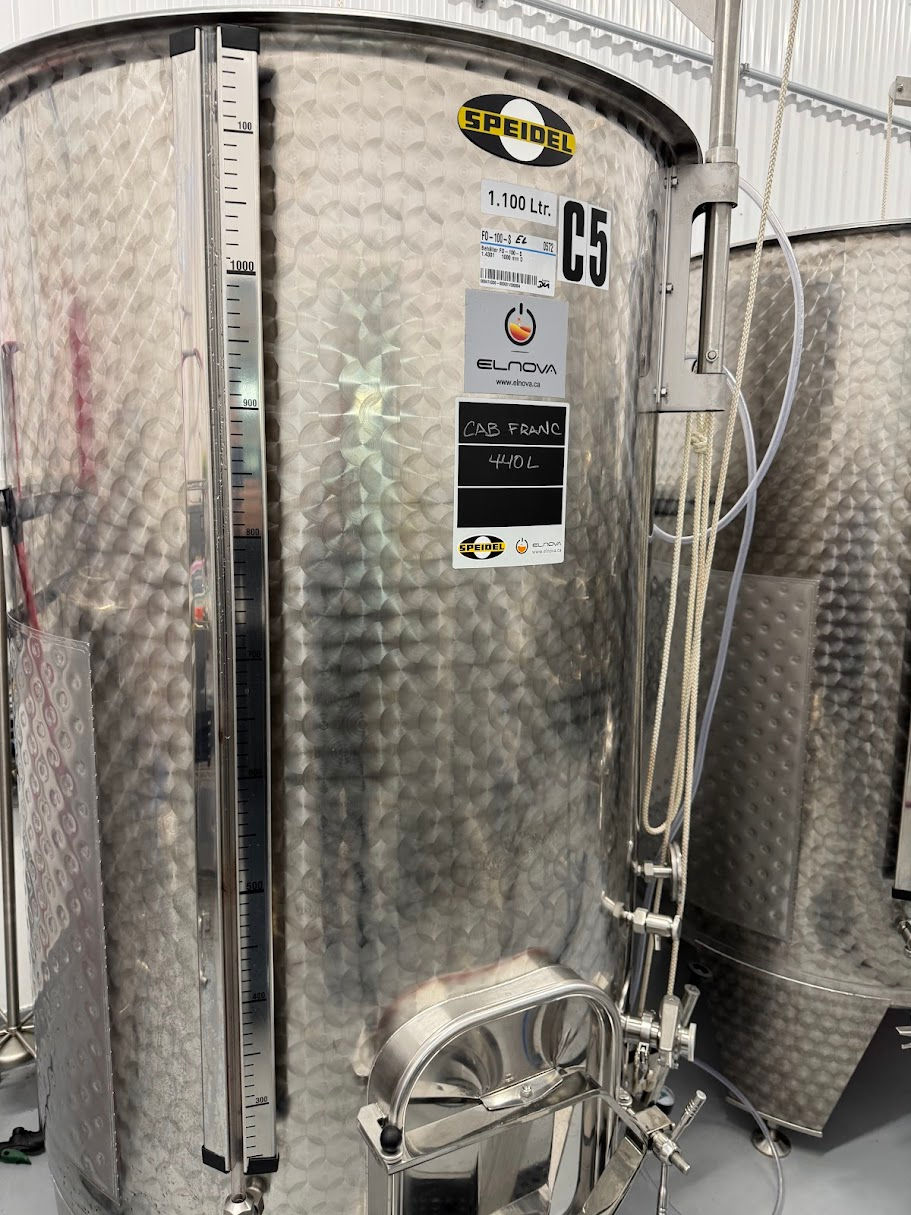
Airtight and neutral, stainless steel tanks prevent oxygen exposure and add no external aromas. They preserve freshness, acidity, and the primary fruit characteristics of the wine — making them ideal for white, rosé, and light red wines. We use this method to age our Riesling, which spends a few months in stainless steel to maintain its crispness and purity.
Clay Amphorae

Made from porous clay, amphorae allow natural micro-oxygenation similar to oak, but without imparting any flavor. They produce wines with a pure expression, a slightly grainy texture, and beautiful minerality. Highly valued in organic and natural winemaking, amphorae will soon make their appearance in our winery.
7. Blending (Assemblage) (optional)
Most of our wines are made from a single grape variety — what we call varietal wines. This approach highlights the unique personality of each grape, emphasizing its distinct character. It’s a common practice in the New World, but also found in several European wine regions such as Burgundy, the Loire Valley, the Rhône Valley, and Tuscany. By contrast, it remains quite rare in Bordeaux reds, where blending is the rule.
Choosing between a varietal wine and a blend ultimately comes down to style and the winemaker’s vision. It’s the winemaker who defines the desired aromatic profile, texture, and tannin structure. The pursuit of balance and consistency from one vintage to the next often guides the proportions used in a blend.
For example, our Merlot–Cabernet Franc blend offers a perfect harmony between bright fruit and silky tannins.
8. Filtration
Clarifying and filtering the wine are essential steps in crafting a product that’s clear, stable, and ready for bottling. Among the various physical filtration methods, plate filters stand out for their versatility and efficiency — especially when no fining agents are used.

This type of filter is made up of several plates covered with filter sheets. The wine is pumped through these plates, as though passing through multiple layers of very fine paper. These layers trap impurities such as yeast residues or fine lees, while letting the clarified wine flow back into a stainless steel tank before bottling.
This process is purely mechanical — no fining agents such as gelatin or animal proteins are added. It’s therefore a natural and respectful method that preserves the wine’s full flavor and authenticity. This approach is especially valued in organic and “natural” winemaking.
Beyond enhancing the wine’s brilliance and clarity, filtration also contributes to its stability, ensuring it keeps well once bottled.
9. Bottling
Bottling is a decisive moment in a wine’s life. It’s not simply about filling bottles — it’s about preserving the wine’s quality and stability over time.
To prevent oxidation — which would dull the wine’s freshness and aromas — we make sure to minimize its contact with oxygen throughout the process. This involves using specialized equipment and precise techniques that reduce air exposure during filling.
A small dose of sulfur dioxide (SO₂) is also added just before bottling. This natural preservative has been used in winemaking for centuries: it protects the wine from oxidation and microbial spoilage while maintaining its aromatic expression.
Finally, each bottle is sealed with a 100% natural cork stopper. This choice is far from trivial: cork allows for controlled micro-oxygenation, which helps the wine evolve gracefully in the bottle. It also honors European winemaking tradition, symbolizing elegance, authenticity, and harmony with nature.
10. Bottle Aging
Once bottled, the wine continues to age slowly. The glass is airtight, but the natural cork allows micro-oxygenation, which encourages gentle evolution. This process is essential for fine wines and those meant for long-term aging.
A wine’s ability to age well depends on several factors: tannin richness, adequate acidity, overall balance, and the quality of the wine itself. These determine its cellaring potential.
In the cellar, wine evolves in stages: in its youth, it matures until reaching its peak, before eventually entering decline. The duration varies by type — some wines reach their best after 2 or 3 years, others after 20 years or more. Over time, red wines gradually lighten in color, shifting from ruby to brick red, then tawny.
Ideal storage conditions include a stable temperature around 12 °C (54 °F), complete darkness, humidity between 60% and 75%, and bottles stored on their sides, away from vibration.

Our Pinot Noir, light-bodied, low in acidity, and with very little added sulfur, has a cellaring potential of about 2 to 3 years. In contrast, our Cabernet Franc, more structured and with firmer acidity, can age 6 to 8 years.
Conclusion
From vine to bottle, every gesture matters. Each decision — from harvest timing to vessel choice, maceration length, or cork selection — shapes the wine’s character and its evolution over time.
Winemaking is both a science and an art — a balance of precision, intuition, and respect for living nature. It’s this care at every step that allows wine to keep breathing, evolving, and revealing, year after year, the full richness of the terroir it was born from.


Comments